

Table of Contents
The money order, as we know it today, was originally created in the late 18th century in Great Britain. The post office eventually took over the money order system. Money orders have since been revamped to be more practical and cost effective for the consumer.
Nowadays, a money order is simply a pre-paid paper document that’s used to make payments. Money orders may seem a bit dated to some with digital payment options having become so prevalent. However, there are still certain uses where it can make sense to make transactions via money order.
Where Can I Purchase a Money Order?
Money orders can be purchased from your local post office, a nearby currency exchange, your bank, your credit union, or even at some supermarkets like Ralphs and Walmart. Since money orders are paper documents, you usually cannot buy them online.
How Much Does a Money Order Cost?
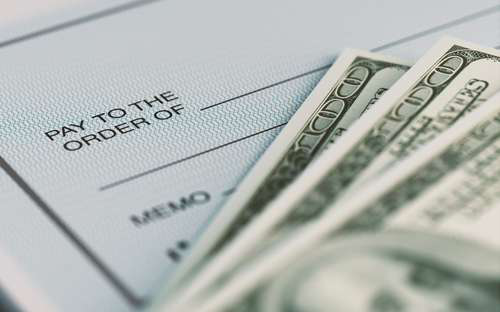
Because they are a pre-paid form of payment, the cost of a money order usually depends on how much you want to purchase, and which provider you use. In the United States, the maximum amount that can be purchased is $1,000; however, if you need more, you can purchase more than one money order to fulfill your needs. In addition to paying the amount you need to purchase, the retail location may also charge a processing fee to create the money order for you. This fee usually depends on the amount you’re purchasing the money order for, which may range from as little as $1.00 at Walmart, $2.55 at a USPS office to $10 or more at banks and other providers.
How Can I Use or Cash a Money Order?
If you receive a money order as a form of payment, consider it to be similar to a check. Like a check, a money order is of no value unless it is cashed or deposited into your bank account, otherwise it’s just another sheet of paper in your wallet. Once deposited to your bank account or converted to cash, the money can be used anyway you see fit for it.
It is usually free to deposit a money order to your own account at a bank or credit union. However, cashing a money order may cost you. Depending on where you cash it, the fee might range from $2-$20 depending on the amount of the money order. Before deciding where to cash your money order, be sure to contact the business where you’re planning to cash it and ask about the fees. Many companies that offer money order cashing services disclose the fees on their website, or have a small poster or pamphlet at their stores that outlines how the cashing fee is calculated.
How do I Purchase a Money Order?
To purchase a money order, you first need to decide where you want to purchase it. As mentioned above, there are several businesses that offer money order services, and their fees may vary. Be sure to choose the business that’s most convenient for you which also charges the lowest fee.
The process to purchase a money order is fairly straightforward:
- Decide on the amount you want to purchase (up to $1,000).
- Fill out the money order details. Be sure to write clearly.
- Pay the money order. Note that this must be done with cash or a debit card.
- Keep the receipt of your purchase in a safe and handy place.
- Deliver the money order in person, if possible, or mail it and request confirmation.
What Are the Benefits of Using a Money Order?
Even though many consumers prefer making financial transactions online, money orders can still have uses in this day and age. They can be useful payment tools when safety, trust, or access to traditional banking services are an issue. Potential benefits of using a money order include:
- Assurance of payment: since money orders are pre-paid forms of payment, the recipient does not need to worry about the funds not being available.
- Privacy: when using a money order to make a transaction, the sender of the funds need to reveal their bank account number to the recipient of the funds.
- Trackable: money order providers like MoneyGram or Wester Union offer tracking services, allowing consumers to see the current status of money order and to confirm if it has been cashed.
- Inexpensive: while you should expect to be charged a fee when buying a money order, the fees can be quite low, especially if you choose a retailer with competitive fees like Walmart.
Due to the above potential benefits, money order are oftentimes still used in the following scenarios:
- Some businesses may require payment by “certified funds” or “guaranteed funds” in certain scenarios, which may include the final payment on a loan or payments for new customers. It is not uncommon for apartment rental places to request monthly rental payments by money order or other certified funds.
- Person-to-person payments between people who don’t know each other. The privacy and assured payment that comes with using money orders can be beneficial to increase the trust and safety for both the sender and recipient of the funds.
- Delivering money through the mail can be done via money orders, which is a lot safer than sending cash. Since money orders can be tracked and traced, they can also be replaced or canceled if there is an issue with the mail.
- Lastly, money orders can be good option for those who do not have a personal bank account, and need to send/receive money for personal reasons, or to pay bills.
Drawbacks with Purchasing a Money Order
There are a few drawbacks to consider if you’re thinking about using a money order to make a transaction. They primarily include:
- Limited amounts: As mentioned above, money orders are capped at $1,000. If you are looking to make a large transaction, you may need to purchase several money orders which can result in higher fees and more time spent.
- Not available online: Since money orders must be purchased at a store, you must take time out of your day to go to a physical location and fill out the paperwork.
- Must be purchased with cash or debit card: If you own a credit card and would like to use it for the transaction in question, you will not be able to use your credit card to purchase the money order.
What Alternatives Are There to Money Orders?
There are several different ways to get money from one place to another; however, some of these other options are not as safe as the money order. These other methods include wire transfers, cashier’s checks, personal checks, online bill pay (through your personal bank), and even a prepaid debit card can be useful to those who do not have a personal bank account. For transfers to another person, payment apps like Zelle and Venmo can also be used, and can be much quicker than using a money order.
Final Thoughts About Money Orders
Money orders are nothing to be afraid of, they are one of the safest ways to make payments, because none of your important personal information is used in the purchasing of, or sending of it. However, they can be a bit cumbersome to obtain, and can come with fees both for purchasing and cashing.